Laminate flooring
A high-density fiberboard (HDF) core with a printed wood image under a very hard melamine top layer. It floats on a click-lock system and comes in 8 to 12 mm thicknesses.
Comparison guide
We are Pisos Pro Medellín, flooring specialists who install and repair floors in apartments, houses and shops across the Aburrá Valley. This guide sums up what we see on real jobs when a client cannot decide between these three materials.
Over more than 15 years and 900+ completed jobs, we have watched how each one handles water, pets and the sun pouring through big windows. We are not tied to any brand: we compare with facts so you can make the call.
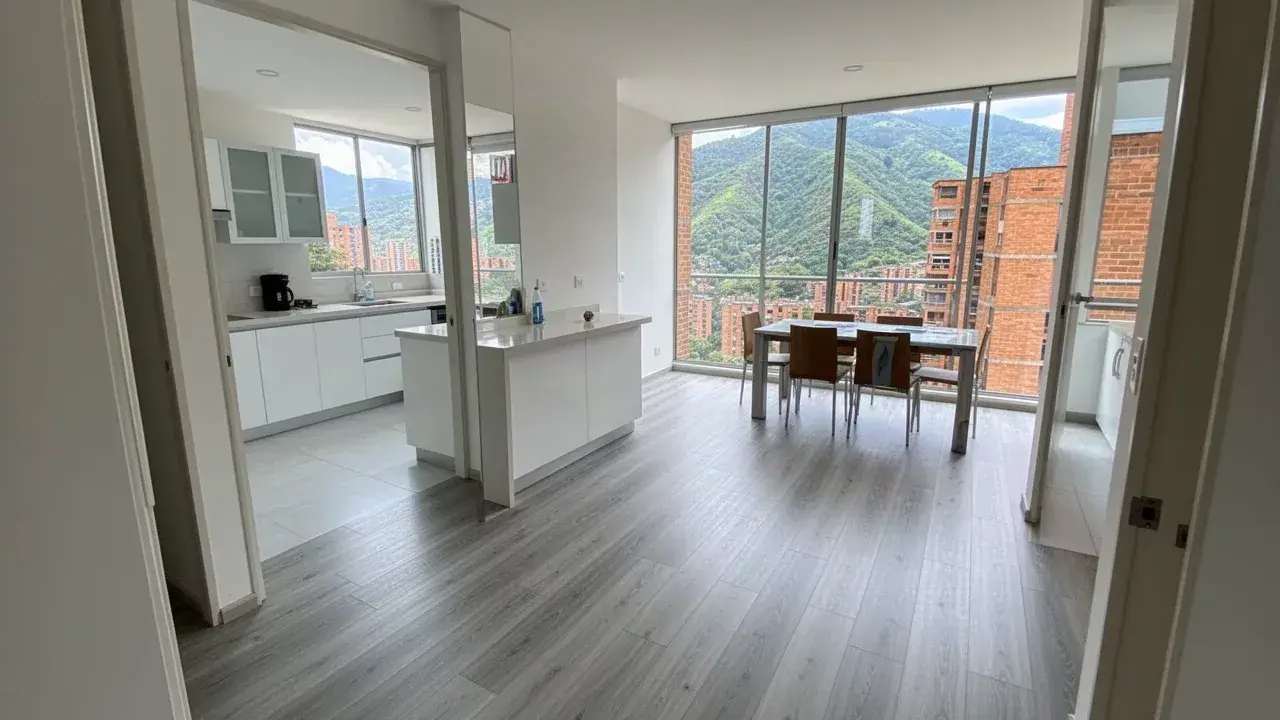
All three mimic wood or stone convincingly, but their cores are different. The core is what decides how each one reacts to water, weight and everyday wear.
A high-density fiberboard (HDF) core with a printed wood image under a very hard melamine top layer. It floats on a click-lock system and comes in 8 to 12 mm thicknesses.
A rigid core made of limestone powder and PVC, topped with a decorative film and a clear wear layer. It measures 4 to 6.5 mm and nearly always has an acoustic underlay attached.
Flexible PVC planks or tiles: LVT is glued to the subfloor (contrapiso) and LVP clicks together. It is the thinnest of the three, 2 to 5 mm depending on format.
No material wins every row. Good-grade laminate resists scratching best, SPC wins on water, and glue-down vinyl is the quietest underfoot.
| Factor | Laminate | SPC | Vinyl (LVT or LVP) |
|---|---|---|---|
| Water | Handles spills wiped up quickly; water in the seams swells the HDF | Waterproof core, does not swell | Waterproof; on glue-down, the adhesive is the weak point |
| Scratches | AC4 or AC5 melamine, the hardest surface of the three | 0.3 to 0.55 mm wear layer, good resistance | 0.2 to 0.55 mm layer; grit marks it more easily |
| Impacts and point loads | Edges can chip under hard knocks | Rigid core copes well with heavy furniture | Thin legs and concentrated weight leave dents |
| Footstep noise | The loudest; relies on a good acoustic underlay | Medium; the attached pad dampens it | The quietest, especially glue-down |
| Subfloor tolerance | Needs a flat base | Hides small imperfections better | Glue-down telegraphs every bump or crack |
| Over existing tile | Yes, with underlay and a level check | Yes, its most common use | Click yes; glue-down needs grout lines filled flush |
| Installed price per m² | COP $65,000 to $120,000 | COP $85,000 to $170,000 | COP $70,000 to $150,000 |
| Typical lifespan at home | 10 to 20 years depending on AC rating | 15 to 25 years depending on wear layer | 10 to 20 years depending on wear layer |
In wet rooms, water calls the shots. SPC and vinyl cope with splashes and mopping, yet neither replaces tile inside the shower itself.
For laminate, look for AC4 (class 32) in homes with pets and AC5 (class 33) for commercial spaces. With SPC and vinyl, the number that matters is the wear layer: 0.3 mm for residential use and 0.5 mm for large dogs or shops.
Claws mark soft vinyl more than laminate's melamine. On the other hand, urine left sitting in a laminate seam ruins it, while on SPC a quick wipe is enough.
Vinyl and SPC with underlay feel warmer to the touch and soften the impact of dropped toys. Laminate feels cooler and sounds louder when children run around.
For heavy traffic, SPC with a 0.5 mm wear layer usually gives the best balance of toughness and price. A doormat that traps grit protects any of the three, since sand is what wears them down most.
Airbnb-style apartments in El Poblado and Laureles take rolling suitcases, heels and daily cleaning. SPC is usually the most practical pick there: it goes in over the existing tile in 2 to 4 days and tolerates frequent mopping.
Ask the installer to leave you one or two spare boxes from the same production batch. If a plank gets damaged between guests, that single piece can be swapped without lifting the rest, and the shade will match.
Laminate works in rental bedrooms with little water risk, never in the bathroom or beside an open kitchen. Glue-down vinyl is budget friendly, although replacing a single tile sometimes leaves adhesive marks.
Two quotes with the same price per square meter can deliver very different floors. These are the gaps people miss most often.
A 6 mm SPC plank may carry a 0.2 mm wear layer, thinner than that of a 5 mm product. Compare the wear layer, not just the thickness printed on the box.
Some prices exclude the acoustic underlay and the plastic vapor barrier. Once added in, they can flip the comparison between two offers.
Laminate with no stated AC rating or use class is a gamble. Ask for the technical data sheet before you pay for material.
The years printed on the box cover product defects, almost never the installation. Ask who answers if a seam opens, and for how long.
See the details of each service: laminate flooring installation, SPC flooring over existing tile and click or glue-down vinyl flooring.
During the visit we test the subfloor for moisture, check the level and show you samples of all three materials in the light of your own space. That way the choice comes from your apartment, not from a catalog.
Find more answers on materials, humidity and building rules in our flooring guides.
Pisos Pro Medellín
Tv. 6 #45-115, El Poblado, Medellín, Antioquia, Colombia
Monday to Saturday: 7:00 a.m. to 9:00 p.m.
Sunday: 9:00 a.m. to 9:00 p.m.