Electric (mat or cable)
- Designed for remodels, bathrooms and bedrooms
- Low profile, goes over the existing subfloor
- Lower upfront cost; running cost depends on use
- Heats up fast, ideal for scheduled use
Underfloor heating
At Pisos Pro Medellín we install electric radiant floor heating under porcelain tile, stone, microcement and engineered hardwood, coordinating the insulation, heating mat, thermostat and finished floor as one job. That way there is no contractor blaming another if something goes wrong.
It is most common in bathrooms and bedrooms of homes in Llanogrande, Las Palmas, Rionegro and the higher hillsides of Envigado, where nights get cold. We are flooring specialists with more than 15 years of experience and over 900 completed jobs across the Aburrá Valley and Eastern Antioquia (Oriente antioqueño).
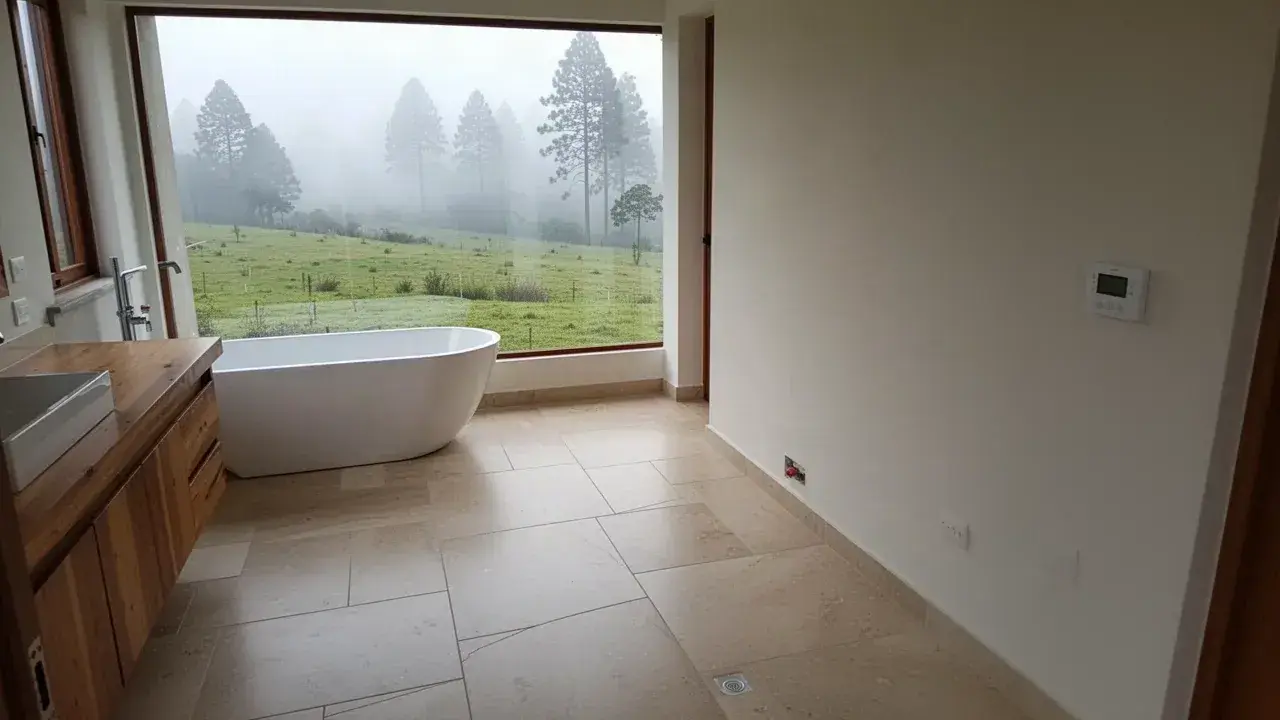
Let's be clear: in the Medellín valley, with mild weather year-round, heated floors are a comfort upgrade for the bathroom or primary bedroom. In Llanogrande, La Ceja, El Retiro or along the Las Palmas road, where early mornings drop toward 10 °C (50 °F), they truly change how the house feels.
They also pay off under cold materials like porcelain and stone, and in vacation homes that sit closed and damp between visits.
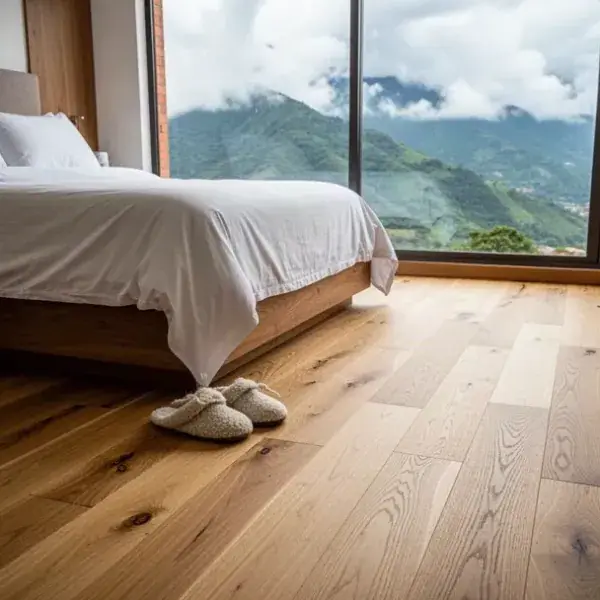
Heating mats come with a thin heating cable attached to a fiberglass mesh at fixed spacing; they unroll over the area, and only the mesh is ever cut, never the cable. Loose cables are clipped into a studded membrane, which lets us cover irregular shapes such as bathrooms with lots of corners.
Both are embedded in the tile thinset or in a thin layer of self-leveling compound. They raise the floor by 3 to 10 mm plus the insulation, something to check at doorways and at the step into the shower.
For floating floors there are thin-film heating sheets that go under the underlayment. Brands such as Warmup, Nuheat and Schluter offer systems for each situation.
A hydronic system circulates warm water through PEX or PE-RT tubing and is designed from the house plans. For country homes (fincas) and new builds in Eastern Antioquia we evaluate it with the builder and the plumbing engineer; in remodeled apartments it is almost never feasible because of height and weight.
Porcelain tile is the natural partner for this system because it conducts and stores heat well; see our porcelain and ceramic tile service. If you want the look and warmth of wood, engineered hardwood flooring performs well with a thermostat that caps the temperature.
Over microcement, the key is waiting for the full system to cure before switching the heat on for the first time.
| Finished floor | Compatibility | What to watch |
|---|---|---|
| Porcelain and ceramic tile | Excellent | Flexible C2-type thinset and movement joints in each field |
| Natural stone and marble | Excellent | Pieces of uniform thickness and sealing afterward |
| Microcement | Very good | Reinforcing mesh and full cure before heating |
| Engineered hardwood | Suitable with a limit | Manufacturer's maximum surface temperature, usually around 27 °C (81 °F) |
| SPC and vinyl | Suitable with a limit | Confirm on the spec sheet that the product allows it |
| Laminate | Only if the manufacturer approves | Heat-compatible underlayment and the same temperature limit |
| Solid hardwood | Not recommended | Shrinks and opens gaps with each heating cycle |
| Thick carpet | Inefficient | Insulates the heat and raises energy use |
Without insulation, much of the heat goes down into the concrete slab and, in a building, into the apartment below. That is why we lay low-profile insulation board under the mat, which shortens warm-up time and lowers the bill.
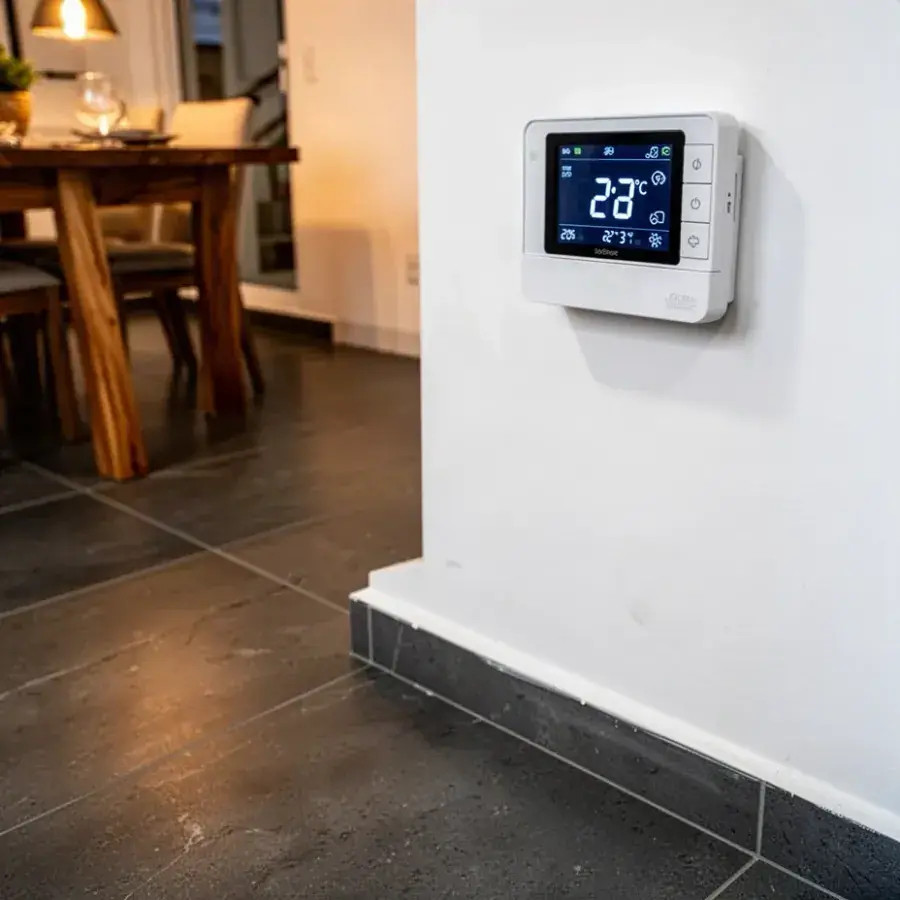
The thermostat has a sensor embedded in the floor that limits surface temperature, which is critical with wood and SPC. Programmable or Wi-Fi models switch the system on only during the hours you actually use the room.
A 4 m² bathroom with a 150 W/m² mat has 600 W installed: two hours a day at full power equals 1.2 kWh. With a thermostat, real consumption is usually lower because the system cycles off once it reaches temperature.
Electric radiant heating is a permanent installation and must comply with RETIE (Reglamento Técnico de Instalaciones Eléctricas), Colombia's technical regulation for electrical installations. It needs a dedicated circuit from the breaker panel, ground-fault protection and an equipment grounding conductor, all the more so in bathrooms.
The panel connection is made by an electrician holding a current professional license (matrícula profesional); we install the mat, sensor and floor and coordinate the final test with them. If your panel lacks capacity, we tell you at the visit before quoting.
Before, during and after covering the mat, we measure cable resistance and insulation with a multimeter and a megohmmeter. A cable nicked under porcelain tile is very expensive to locate, and that check catches it in time.
As a 2026 reference for Medellín and Eastern Antioquia, the installed electric system (insulation, mat or cable, sensor and thermostat) costs COP $250,000 to $450,000 per m², not including the finished floor. In a small bathroom the per-m² figure tends toward the high end, because the thermostat is spread over just a few square meters.
The finished floor is quoted separately depending on the material, and the written quote, in Colombian pesos, itemizes both.
A 4 to 6 m² bathroom takes 2 to 4 working days across insulation, mat and tile, plus curing time before the first startup.
We define the heated zone and leave out the areas under toilets, built-in cabinetry and the shower base. We calculate wattage and place the thermostat and sensor.
We bond insulation board to the clean, level subfloor. Any unevenness gets corrected first.
We roll out the mat without crossing or bunching cables and secure the sensor between two cable runs. We photograph the layout for your records.
We measure resistance and insulation and compare them with the manufacturer's label. The values go into the handover report (acta).
We cover the mat with self-leveling compound or the floor's own thinset, using a plastic trowel so the cable is not damaged. Then we repeat the measurement.
We install the porcelain, stone or wood with adhesives and joints that tolerate heat.
Nothing is switched on until the adhesive cures, usually one to four weeks depending on the spec sheet. Then we raise the temperature gradually and show you how to program the thermostat.
In the valley it is worthwhile mainly in porcelain-tiled bathrooms and the primary bedroom, as a comfort upgrade. In Eastern Antioquia homes, on Las Palmas or in the upper parts of Envigado, you feel the benefit every night.
If your home is in that area, also see our Rionegro and Eastern Antioquia page.
It depends on installed wattage, area, hours of use, insulation and the set temperature. Multiply the installed watts by the hours it runs to get the theoretical maximum; the thermostat brings that number down.
Your quote lists the total wattage of your system so you can work out the cost with your electricity rate.
Usually not. The mat has to sit directly under the finish, so the current floor must come up, or a new floor goes on top if door clearances allow.
In a bathroom, the practical time to do it is when you replace the tile.
The labor is covered by our 1-year warranty. The mat and thermostat carry the manufacturer's warranty, which usually requires the electrical test records we leave in the handover report.
Tell us which room you want to heat, what floor you have or plan to install, and where the house is. We schedule a free site visit in the Aburrá Valley and nearby Eastern Antioquia and send you an itemized written quote.
Labor on the installation carries a 1-year warranty.
Pisos Pro Medellín
Tv. 6 #45-115, El Poblado, Medellín, Antioquia, Colombia
Monday to Saturday: 7:00 a.m. to 9:00 p.m.
Sunday: 9:00 a.m. to 9:00 p.m.