Free weights and CrossFit zones
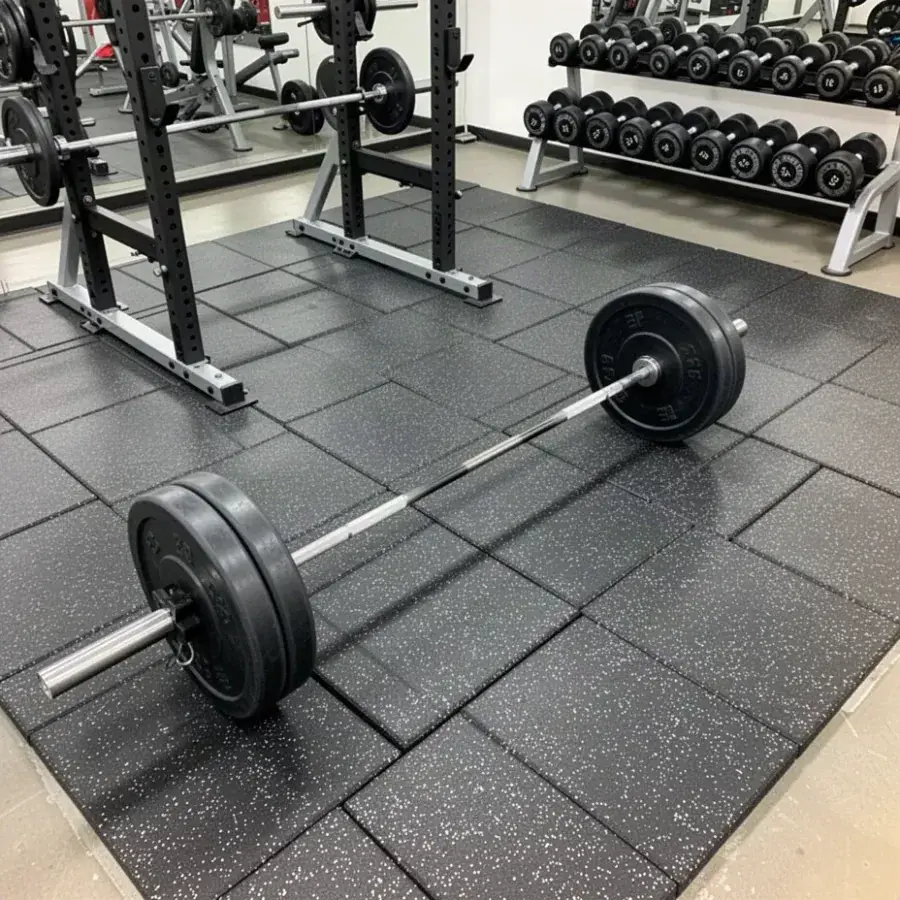
High-density rubber tiles from 20 to 40 mm, many with an EPDM top layer. They absorb dropped plates and dumbbells and protect the slab; in deadlift areas we add lifting platforms.
Gyms, courts and studios
At Pisos Pro Medellín we install flooring for commercial gyms, residential complex gyms, indoor courts and dance, yoga and Pilates studios. We are flooring specialists with more than 15 years of experience and over 900 jobs in Medellín and Eastern Antioquia.
Sports flooring is chosen for the activity, not the color: dropping a 100 kg barbell has nothing in common with running on a treadmill or jumping in a dance class. That is why every project starts with a list of what will happen in each zone.
In apartment buildings, the floor also has to protect the slab and the neighbor below. That is where many gyms in condominium buildings fall short, and where experience counts most.
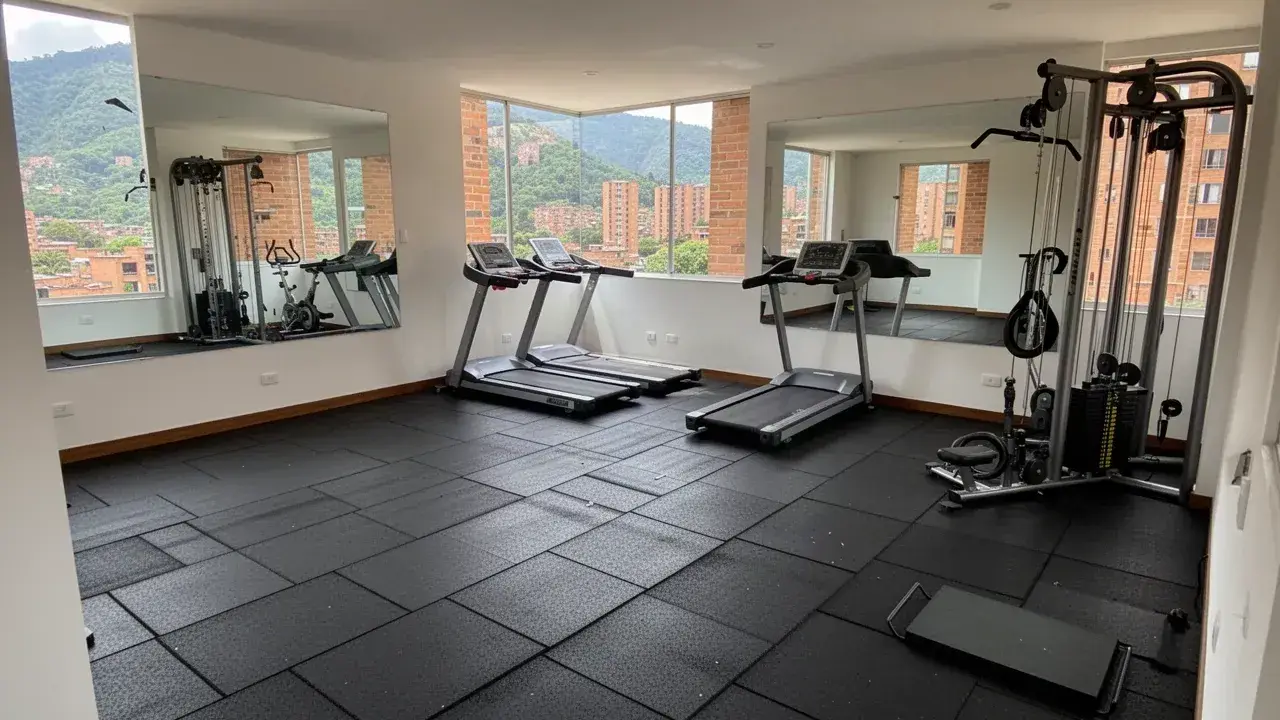
The service includes an activity analysis by zone, slab inspection, leveling, supply of the system, installation, line marking and handover with a cleaning plan. We work with rolled rubber and rubber tiles, sports vinyl, modular interlocking tiles, acrylic sports coatings, polyurethane and floating wood floors.
We serve commercial gyms, gyms and clubhouses in residential complexes in El Poblado, Envigado and Sabaneta, schools, clubs and boutique studios. For rubber in other settings, such as playgrounds or wet areas, see our rubber flooring service.
High-density rubber tiles from 20 to 40 mm, many with an EPDM top layer. They absorb dropped plates and dumbbells and protect the slab; in deadlift areas we add lifting platforms.
Under treadmills, ellipticals and cable machines, 6 to 10 mm rolled rubber or 15 mm tiles are enough. The rubber spreads the load from equipment feet and dampens motor vibration.
For futsal, basketball and volleyball we use polypropylene modular tiles, acrylic sports coating over concrete or rolled sports vinyl with a foam backing. Vinyl from brands such as Gerflor (Taraflex) or Tarkett (Omnisports) offers the best shock absorption on indoor courts.
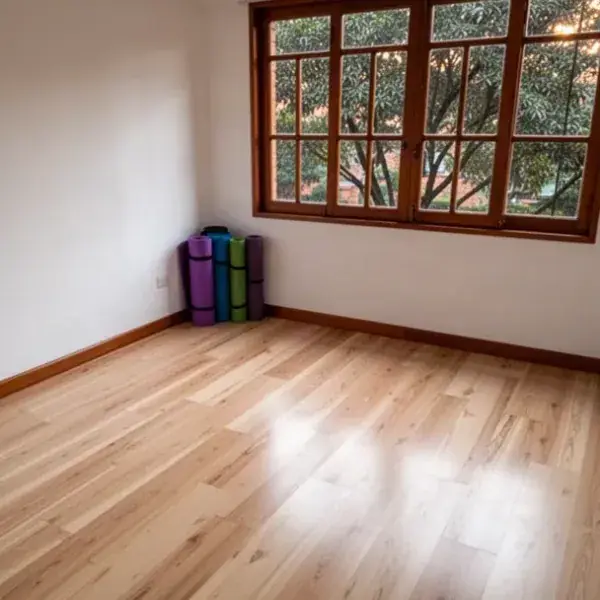
For dance with jumps, a sprung floor on sleepers with elastomeric pads, finished in wood such as maple or in dance vinyl. For low-impact yoga and Pilates, engineered hardwood or a warm vinyl works well.
The European standard EN 14904 classifies indoor sports surfaces by shock absorption, vertical deformation and friction, and sports vinyl manufacturers use it as their benchmark. We ask for each product's data sheet so you compare real performance figures, not just thickness.
| Activity | Recommended thickness | System |
|---|---|---|
| Dumbbells up to 30 kg | 15 to 20 mm | High-density rubber tiles |
| Olympic barbells and CrossFit | 20 to 30 mm | Rubber tiles with EPDM top layer |
| Overhead drops | 40 mm or more | Thick tiles with a lifting platform |
| Cardio and machines | 6 to 15 mm | Rolled rubber or tiles |
| Indoor courts | 4.5 to 9 mm | Foam-backed sports vinyl or polyurethane |
| Dance and aerobics | Depends on the system | Sprung floor on shock pads or dance vinyl |
The thud of a dumbbell travels through the structure and is heard several floors down, even when 15 mm rubber seems like enough. It is one of the most common complaints brought to a complex's building management (administración).
The fix is a layered system: an isolation mat or rubber pads on the slab, a board that spreads the load and the rubber finish on top. In deadlift zones we install floating platforms that do not touch the walls.
Colombia's condominium law (propiedad horizontal, Ley 675 de 2001) and the national public safety and coexistence code (Código Nacional de Seguridad y Convivencia Ciudadana, Ley 1801 de 2016) back neighbor noise complaints, and each building's bylaws set quiet hours. Learn more in our guide to building rules for floor renovation.
Rubber expands in the heat and contracts at night; without perimeter gluing or adhesive along traffic paths, tiles separate and gaps open up. Where plates get dragged, we bond them with polyurethane adhesive.
Low-grade recycled SBR rubber smells for months in enclosed basement gyms. We choose low-odor products with an EPDM top layer and recommend ventilating for the first few weeks.
In basements and ground floors the slab can carry moisture from the soil. The adhesive fails to cure, the roll lifts and white stains appear at the seams, so we test before gluing.
Wood takes on moisture during Medellín's rainy seasons. Without a perimeter gap under the baseboard (zócalo), a floating floor buckles in the middle of the room.
Sports or gym flooring in Medellín costs COP $120,000 to $350,000 per m² installed, depending on the system. Rolled rubber for cardio sits at the low end of the range; sprung wood for dance and foam-backed sports vinyl, at the high end.
| Factor | Effect on price |
|---|---|
| System | Rubber, vinyl, polyurethane and wood carry very different costs |
| Thickness and density | Rubber prices rise with every millimeter and with an EPDM layer |
| Acoustic isolation | Anti-vibration layers add material and floor height |
| Slab leveling | Deviations over 3 mm in 2 m require self-leveler first |
| Line marking | Court lines are priced per sport and per set of lines |
We check flatness with a 2 m straightedge and slab moisture; on upper floors we ask for the structural engineer's opinion on loads.
We correct dips with self-leveler and repair cracks so no tile rocks.
If the gym sits above apartments, the anti-vibration mat and board go down first.
Interlocking or polyurethane-glued tiles, rolls with glued or heat-welded seams, and floating wood with a perimeter expansion gap.
We paint court lines with sports paint, following the dimensions of each discipline.
A signed completion record showing where each system is, plus usage advice and a cleaning plan.
It depends on the weight and the drop height. For dumbbells up to 30 kg, 15 to 20 mm is enough; for Olympic barbells, 20 to 30 mm; and if plates drop from overhead, 40 mm with a platform.
In apartment buildings we recommend going one level up and adding isolation, because the issue is noise as much as the slab.
Yes, but a residential building slab is designed for lighter loads than a gym with racks, machines and plates. Before installation, a structural engineer must check the slab's capacity under NSR-10, Colombia's seismic building code.
We design the floor to spread loads and isolate noise, but we do not replace that engineering review.
Vacuum or sweep rubber daily and mop with water and diluted neutral detergent, never bleach, oils or solvents, which dry it out. Sports vinyl is washed with a floor scrubber and neutral detergent.
Clean dance wood with a dry or barely damp mop, never soaking it.
Tell us the type of gym or court, the area and which floor of the building it is on, and we will schedule a free technical visit. You receive a written quote with the system and thickness for each zone.
Installation carries a 1-year labor warranty; the terms are on our warranty page.
Pisos Pro Medellín
Tv. 6 #45-115, El Poblado, Medellín, Antioquia, Colombia
Monday to Saturday: 7:00 a.m. to 9:00 p.m.
Sunday: 9:00 a.m. to 9:00 p.m.