Minor repair (no permit)
- Swapping ceramic tile for porcelain, SPC or hardwood.
- Leveling the existing subfloor (contrapiso).
- Sanding and refinishing a hardwood floor.
- Installing baseboards and transition strips.
Guide for apartments and gated complexes
At Pisos Pro Medellín we replace floors in apartments, gated residential complexes (conjuntos cerrados) and offices under the condominium regime in Medellín, Envigado and Sabaneta. After more than 900 jobs, we know a renovation starts going well at the front desk, long before the first cut.
This guide sums up what building management typically requires: approval, permitted hours, elevator use, debris handling and paperwork for the crew. At the end you will find a checklist to run through before work begins.
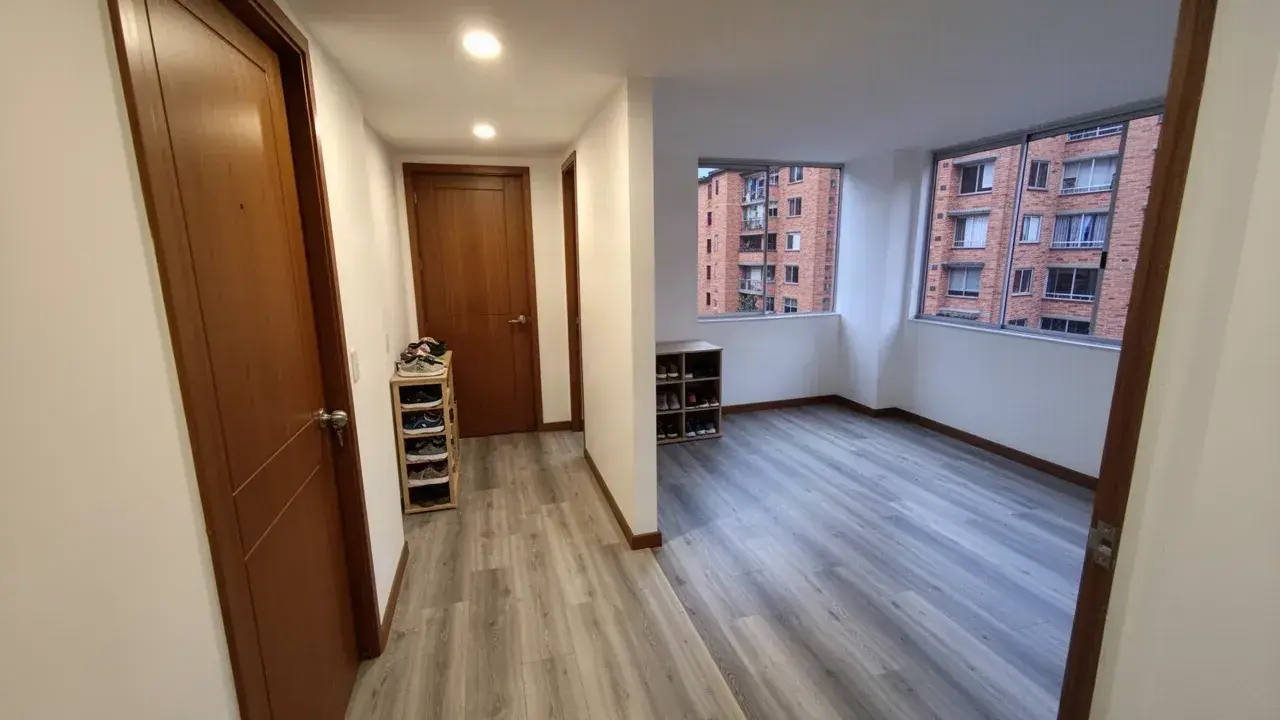
In practice, yes: you must notify building management (administración) and get authorization. Colombia's condominium regime (propiedad horizontal, Ley 675 de 2001) lets owners carry out works inside their private unit as long as they do not affect the structure, the common property or the safety of the building.
The exact procedure is set by each property's bylaws (reglamento de propiedad horizontal) and house rules (manual de convivencia). The usual route is to fill in a works request form, describe the job and its dates, and provide the contractor's details.
Some complexes also ask for a refundable deposit to cover possible damage to common areas. If you rent, you will also need the owner's written authorization.
This guide is for general information only and is not legal advice; it does not replace reading your building's bylaws.
Replacing floors and tile counts as a minor repair (reparación locativa) under Decreto 1077 de 2015, so it generally does not require a municipal building permit (licencia de construcción). Approval from building management is still mandatory even when no permit is needed.
The national code of police and civic coexistence (Código Nacional de Seguridad y Convivencia Ciudadana, Ley 1801 de 2016) treats noise that disturbs neighbors as a breach of coexistence. The precise hours are set by each building's house rules.
Many complexes allow noisy work on weekdays during daytime hours and for half a day on Saturday, and ban it on Sundays and public holidays. Confirm your building's schedule before you get quotes, since it changes how long the job takes.
The loudest tasks are chipping out old ceramic tile with a hammer and cutting porcelain. A floating floor laid over the existing tile skips almost all of that stage.
Many buildings assign a service elevator and a time slot for bringing up materials. Booking it in advance keeps the boxes from getting stuck in the parking garage.
We line the elevator with padded blankets, lay cardboard in hallways and the lobby, and clean the route we used every day. Building management inspects everything at the end.
Rubble leaves in closed sacks along the route management designates, never down the garbage chute. We take it to an authorized debris disposal site (escombrera).
The delivery vehicle needs a place and a time to unload without blocking the entrance. The front desk (portería) should have a list of who and what is coming in.
Beyond the noise of the work itself, think about footstep noise once the new floor is down. Some bylaws require an acoustic underlayment beneath floating floors, and even where they do not, your downstairs neighbor will thank you.
| Floor | Impact noise | How to reduce it |
|---|---|---|
| Porcelain and ceramic tile | High | Acoustic membrane under the mortar before setting tile |
| Floating laminate | Medium to high | High-density acoustic underlayment, not thin foam |
| SPC and vinyl | Medium | Products with a factory-attached acoustic pad |
| Engineered hardwood | Medium | Acoustic underlayment plus rugs in walkways |
| Cork | Low | Its own cell structure absorbs impact |
| Carpet | Very low | Needs nothing extra |
If your bylaws require sound insulation, cork flooring or SPC flooring with an acoustic pad usually complies without any wet work.
Every building has its own forms, but these are the papers requested most often. Our crew works with social security and occupational risk insurance (ARL) fully up to date, and we hand over whatever building management asks for.
We help you complete the form, send in the crew's documents and schedule the job within the building's hours. You just sign the request and we take care of the rest, whether it is a new porcelain or ceramic tile floor or a rigid floor installed with no rubble.
For technical questions about materials or installation, browse the rest of our practical flooring guides.
Pisos Pro Medellín
Tv. 6 #45-115, El Poblado, Medellín, Antioquia, Colombia
Monday to Saturday: 7:00 a.m. to 9:00 p.m.
Sunday: 9:00 a.m. to 9:00 p.m.